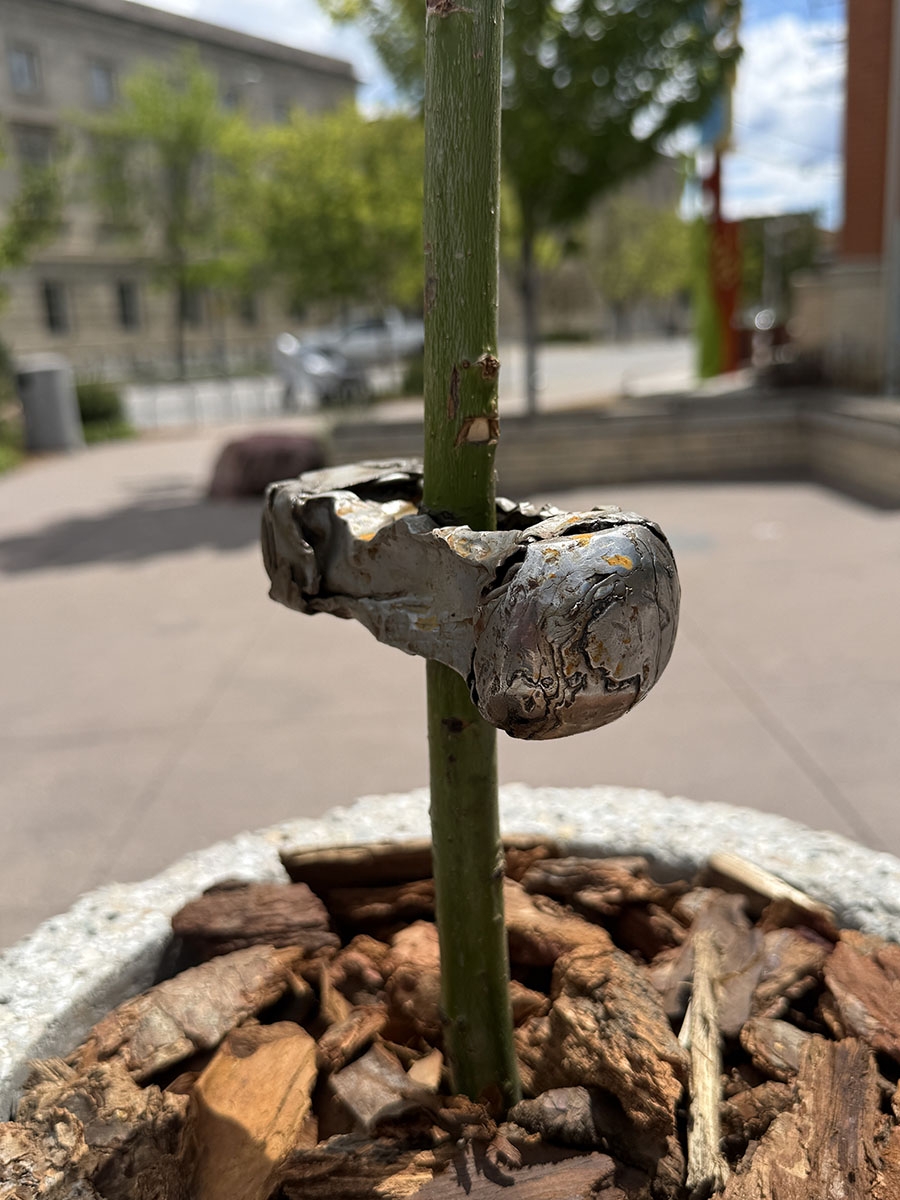
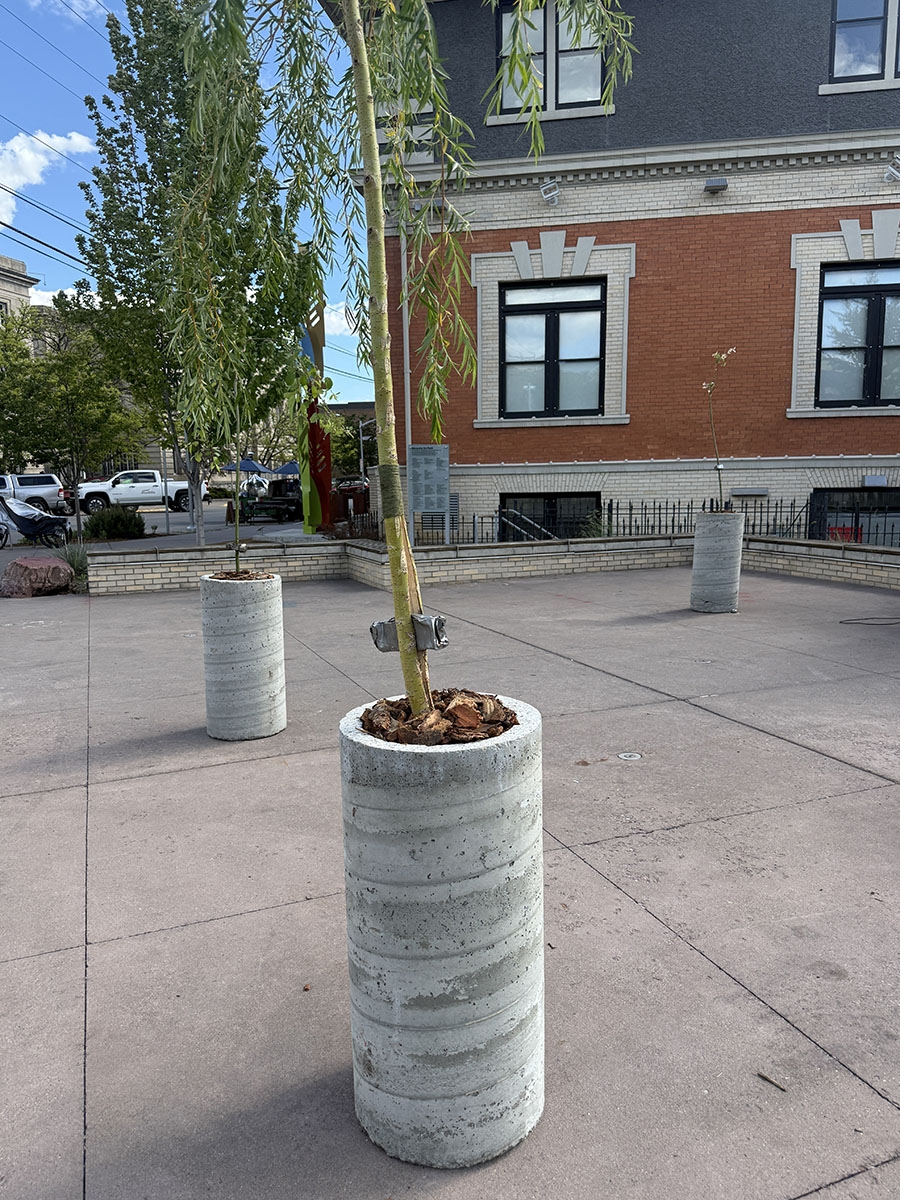
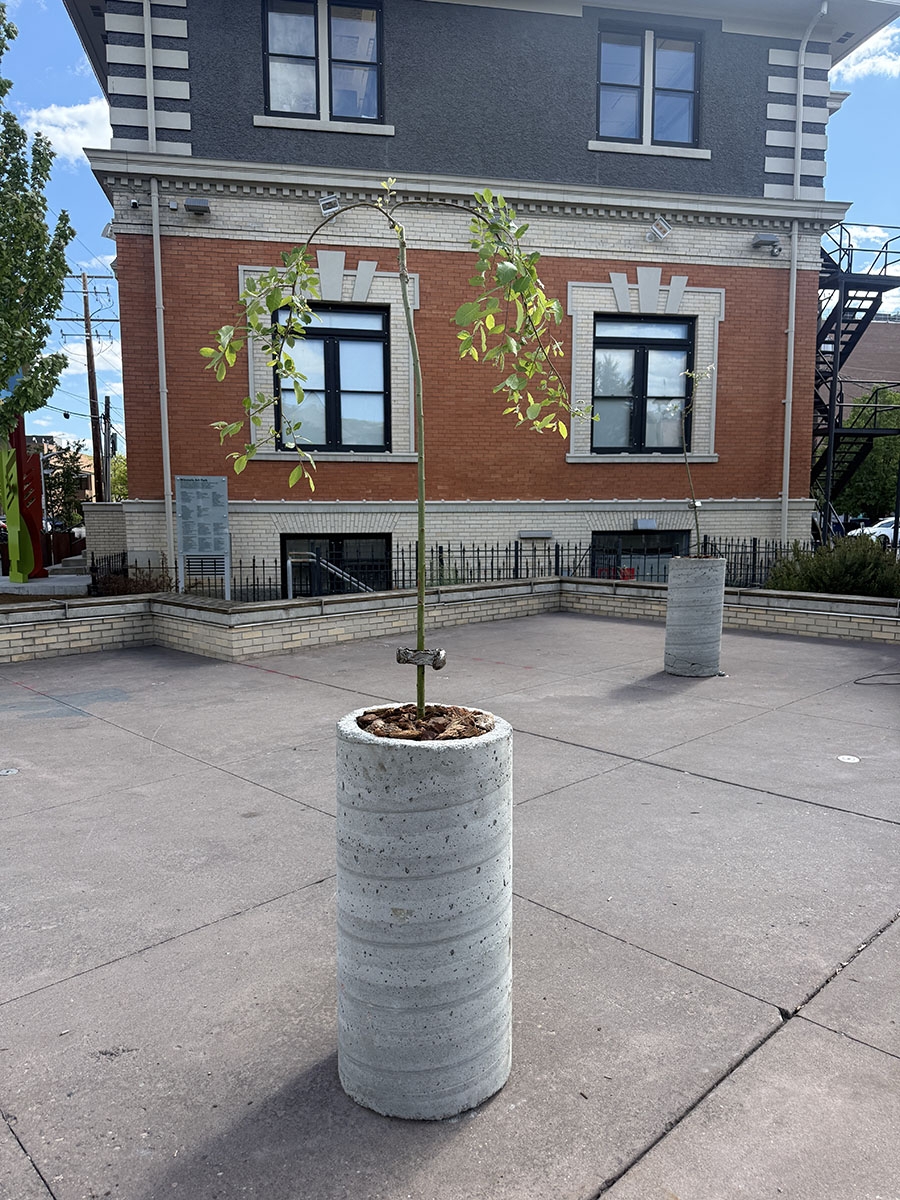
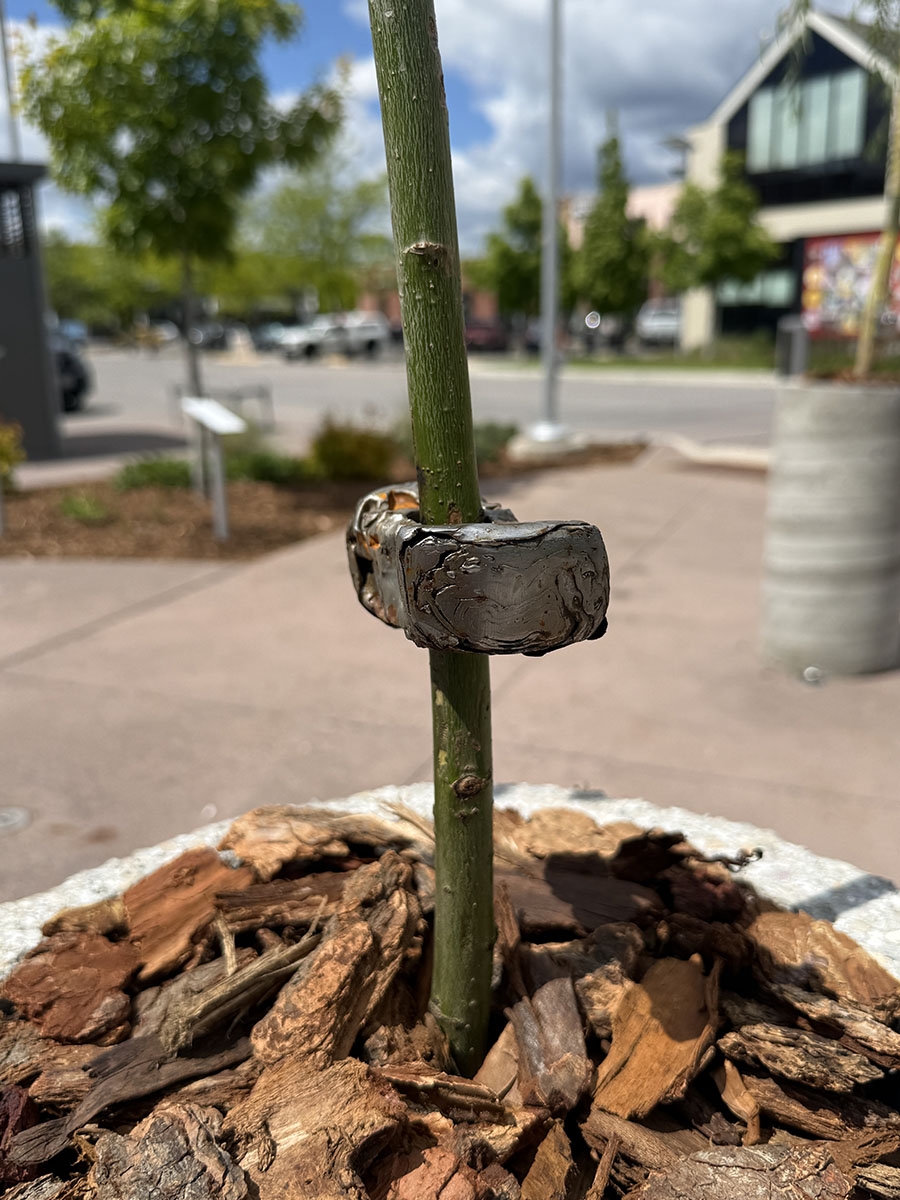
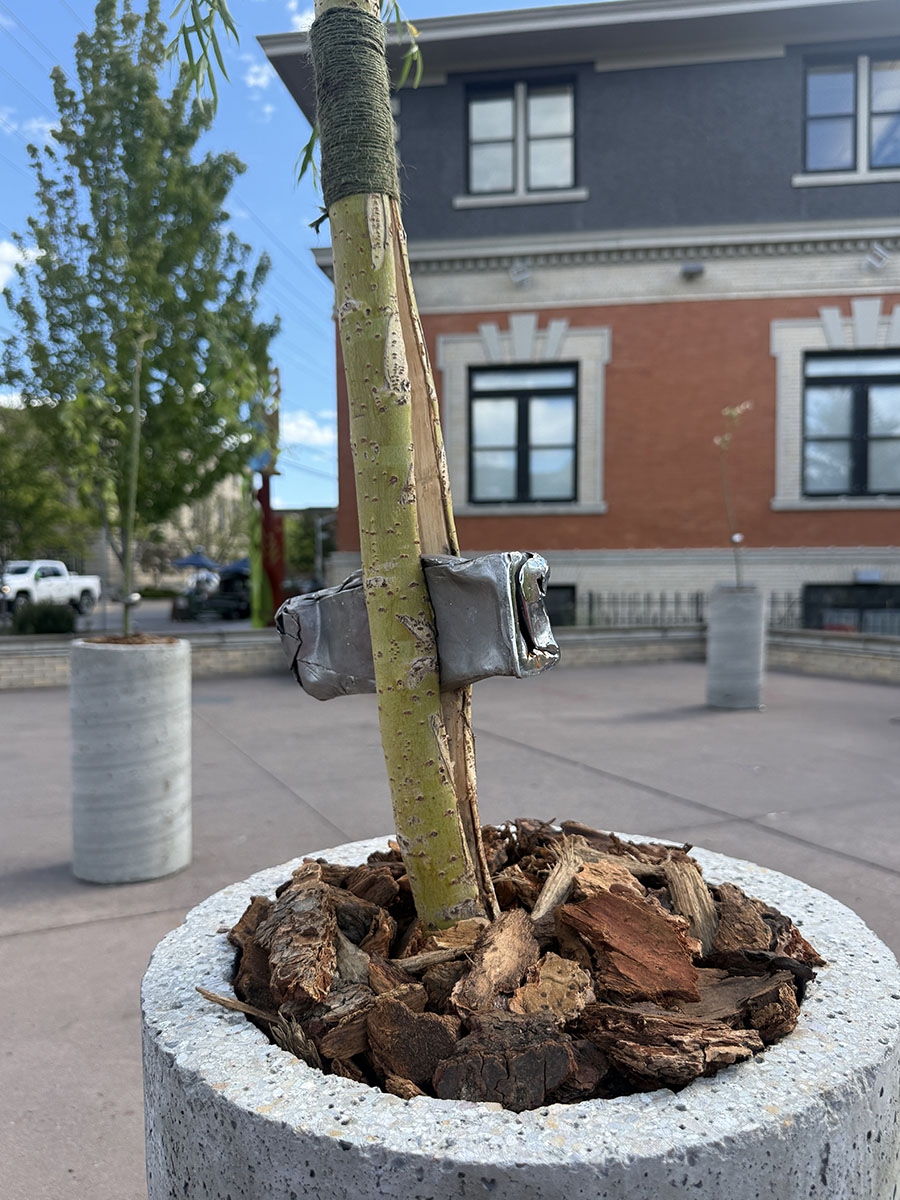
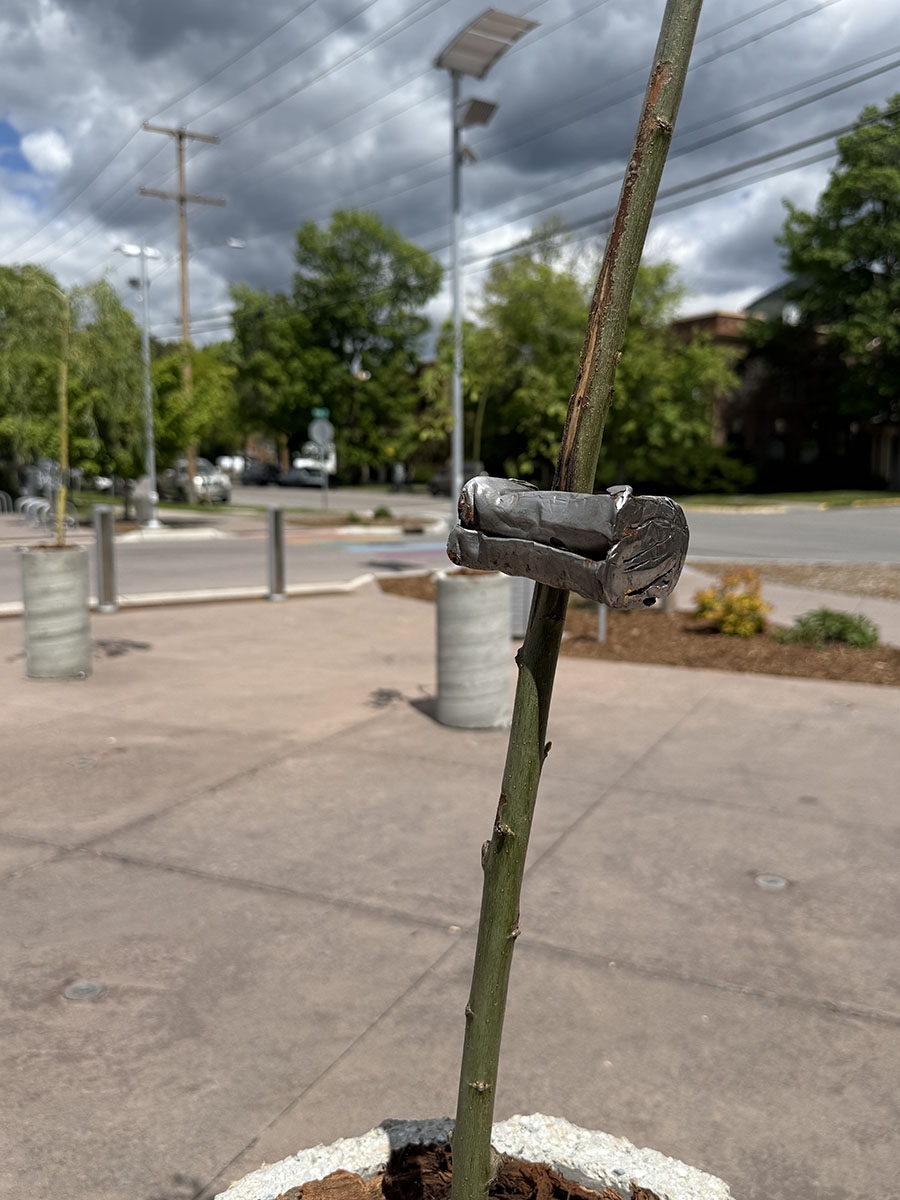
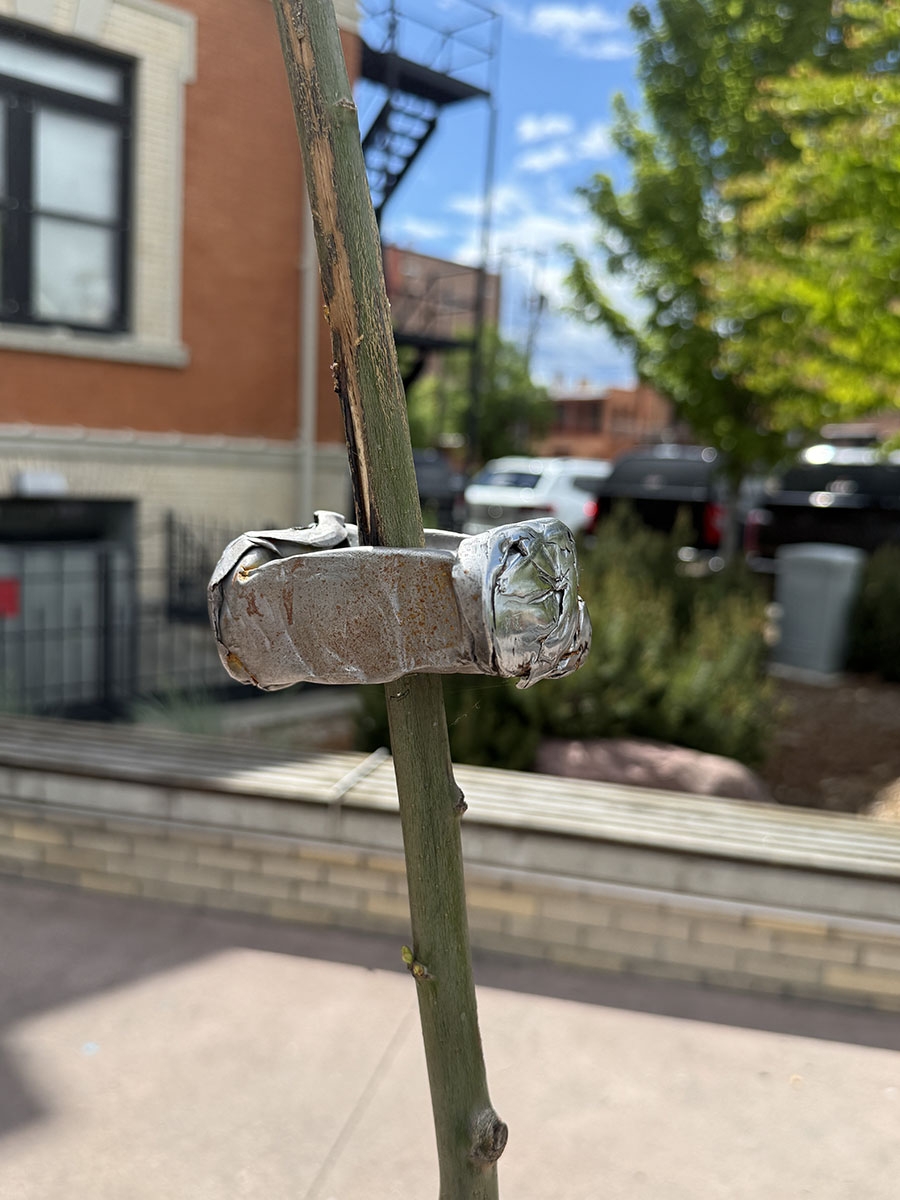
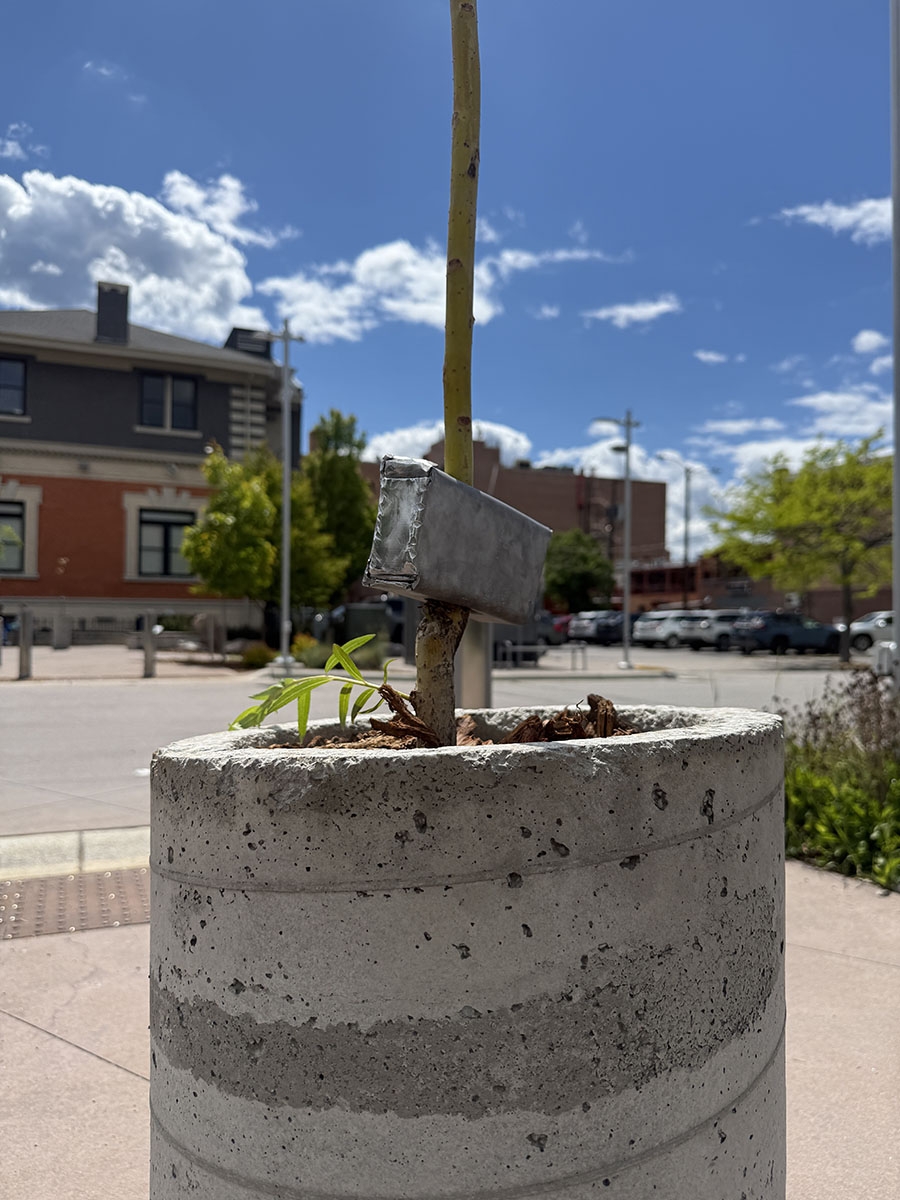
The form of How to Grow a Hammer was inspired by a memory of a mentor from my teenage years. He was helping me find work landscaping when we broke an old axe handle. Before going out to buy a new one he hung the old axe head on a nearby tree branch saying eventually we could cut the limb and have a new axe. Today I am unsure if that axe is still growing or if someone is using it.
How to Grow a Hammer is a series of symbolic tools for future direct action. These hammer heads are crafted from smashed tesla parts and they are placed-on willow trees to slowly grow their handles. Following in the footsteps of the Luddites, a 19th-century labor rights movement who smashed automated looms. The Luddites wielded sledgehammers forged by the same blacksmiths who created the looms they destroyed. They targeted these machines not out of fear or rejection of technology but as a political critique of how the machines were implemented. The work weaves together the legacy of the Luddites, with willow's regional history as a material of repair and resilience, creating a tool that is both symbol and living thing.
Tesla, X, Space X, xAI are all interconnected companies that have been getting increased scrutiny over; rapid expansion of data centers, safety, pollution, hate speech, and government influence. Just like the luddites I am drawing inspiration from; I am not against electric cars, space travel, etc but against the ways they are being implemented and how they are impacting people. These companies all owned by the same individual are not unique, this is the first iteration of an ongoing series considering the actions of different corporations through the crafting of their corresponding sledgehammers.
The Luddites’s poetic tool selection is evidence of a deliberate considered action, deeper than the heated reaction of throwing a nearby rock. This is why I am building, growing, and distributing these tools so they are available if the time for action comes. Historically many successful movements that are looked at as peaceful were flanked by the potential of uncivil action. How to Grow a Hammer starts to form that flank. This is not a call to action; it is a call to start considering when action is needed.
We can hope the time to use these tools never comes and they live on only as a symbolic action and objects of contemplation.